Last Friday, Anthropic shipped Claude Design. If you saw the headline and assumed "Anthropic finally has its answer to Midjourney and Sora," you were wrong. And the distinction is the whole point.
Claude Design is not an image generator. It's not a video model. It's a design-workflow tool: prototypes, slide decks, one-pagers, mockups. You describe what you want in plain English, it builds it, and you iterate. The distinctive feature is that it reads your codebase and design files to apply your design system automatically. The target audience, in Anthropic's own words, is "founders and product managers without a design background." Export to PDF, PPTX, URL, or Canva.
The day it launched, Figma dropped 7%.
What took three years
Every other frontier AI lab has shipped generative media. OpenAI has DALL-E and Sora. Google has Imagen and Veo. Midjourney exists as an entire company. Meta, xAI, ByteDance, all in. For three years, Anthropic has been conspicuously absent from that race.
That wasn't because they couldn't build it. Claude's vision and multimodal capabilities have been competitive for a while. They could have shipped consumer image gen whenever they wanted.
They chose not to.
Consumer image and video generation is one of the most misuse-heavy products in AI. Deepfakes. Non-consensual imagery. Copyright disputes at scale. An endless content-moderation war. Every lab that ships it spends the next eighteen months fighting fires and explaining themselves to regulators. For a company whose whole brand is built on safety and responsibility, shipping a Midjourney competitor would have burned the positioning that took years to build.
So they waited. And while they waited, they watched the market.
What they shipped instead
What Anthropic decided was worth building wasn't a better Midjourney. It was a better path from "I have an idea" to "I have a deck."
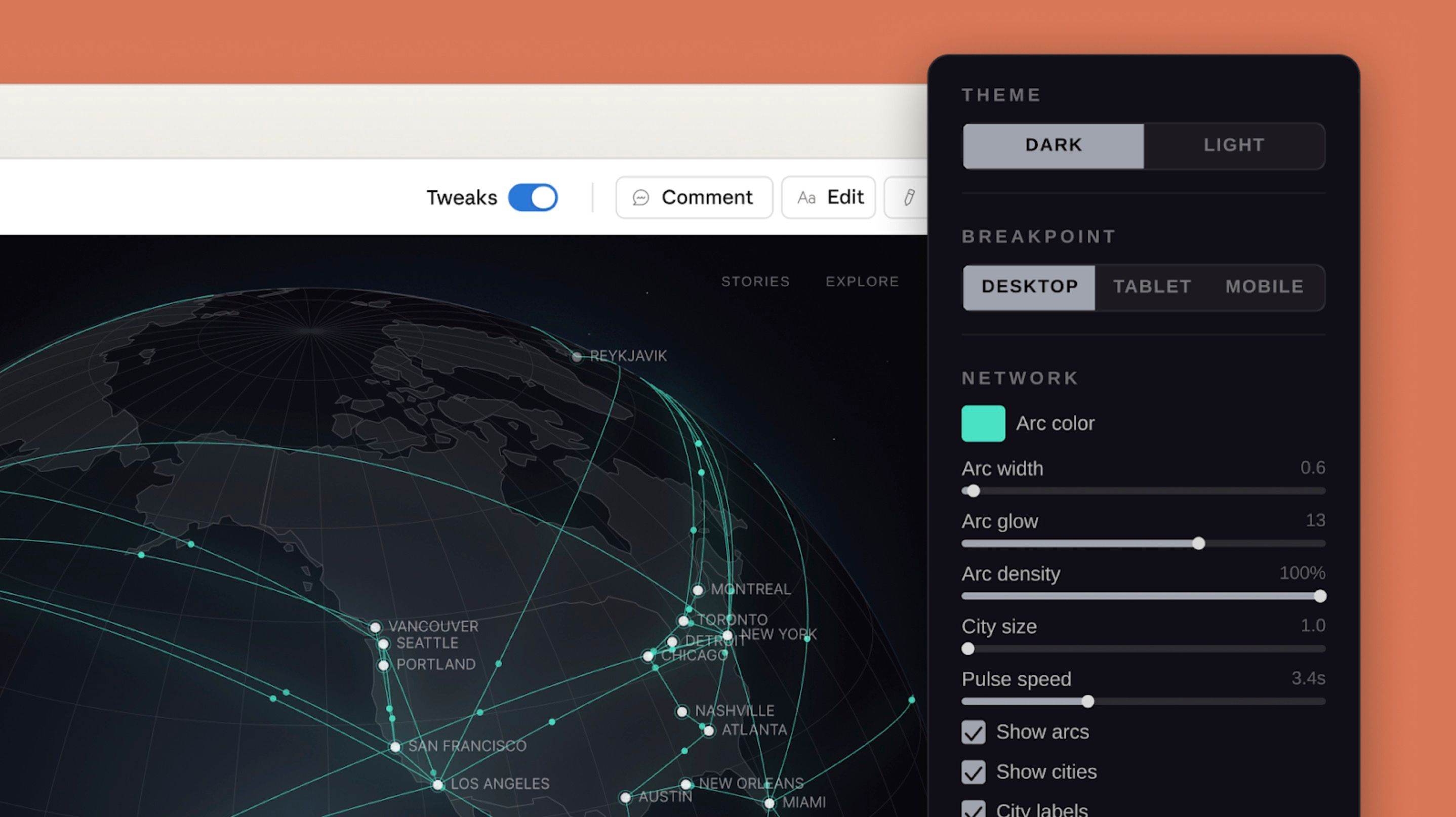
Here's what Claude Design actually does differently.
It starts with your context, not a blank canvas. Point it at your codebase or design files and it picks up your brand automatically. Your colors, your typography, your component patterns, all applied without you having to prompt for them.
It targets work, not art. Prototypes, not portraits. Pitch decks, not wallpapers. One-pagers, not short films. Every output type is something a founder or operator actually has to produce in a given week.
It exits to where work lives. PDF for investors. PPTX for sales calls. Canva for marketing teams. URL for sharing a prototype. Not a closed garden you have to export out of.
Compare that to "generate a cinematic video of a fox in a forest." One of those is a consumer toy. The other is an infrastructure product for how businesses actually ship.
"What previously took a week of back-and-forth now happens in a single conversation with living prototypes." Aneesh Kethini, Product Manager, Datadog (via Anthropic)
The strategic lesson
There's a founder lesson buried in the three-year delay.
Restraint, done deliberately, is a positioning move. Not a limitation.
Anthropic didn't "miss" image generation. They refused to play that game on those terms. When they finally entered visual AI, they entered on their terms: business-first, builder-first, safety-first. They turned a three-year gap in their product line into a sharper identity.
Most founders can't imagine leaving a hot market alone. Everyone else is racing in, the press is writing about it weekly, your VCs are asking when you'll ship your version. The pressure to just build the thing everyone else is building is enormous.
The Anthropic move says: if the dominant version of a product forces you to compromise your identity, don't ship that product. Ship a different one, aimed at a different user, solving a related problem. Come in at an altitude where your identity is an advantage instead of a liability.
What this actually unlocks
If you're a founder who has been paying for Canva, hiring part-time designers, or trying to wrestle Figma into producing a pitch deck by Friday, Claude Design is meaningfully useful to you. The design-system awareness is the real unlock. Most AI design tools produce generic output. If it reads your brand from your codebase, it produces your output.
This is the same pattern playing out across AI over the past eighteen months. The tools that stick aren't the ones that replace experts at their craft. They're the ones that fill a missing function for people who don't have the expert. You don't have a designer. You need a deck. The deck is blocking your Monday. That's the use case.
Whether this is enough to threaten Figma at the enterprise level is a different question. Figma's moat is collaboration between designers, not idea-to-prototype speed. The 7% drop on launch day says the market sees a threat anyway. I read it differently. Anthropic is staking a different claim: tooling for people who build, not for people who design.
Where this goes
The longer game is worth watching. If Claude Design works, Anthropic has a template. Take a category OpenAI and Google are crowding, skip the consumer version, ship the business-workflow version instead. The next frontier in AI isn't going to be won by whoever ships the flashiest toy. It's going to be won by whoever makes real work faster for the people paying for it.
The same week Anthropic shipped Claude Design, they also turned down VC offers valuing the company at $800 billion, well above the $380B valuation from their February round. Discipline on product, discipline on capital. The pattern holds.
Anthropic waited three years, watched what the hype cycle produced, and then built the version that matters.
Smart move.